
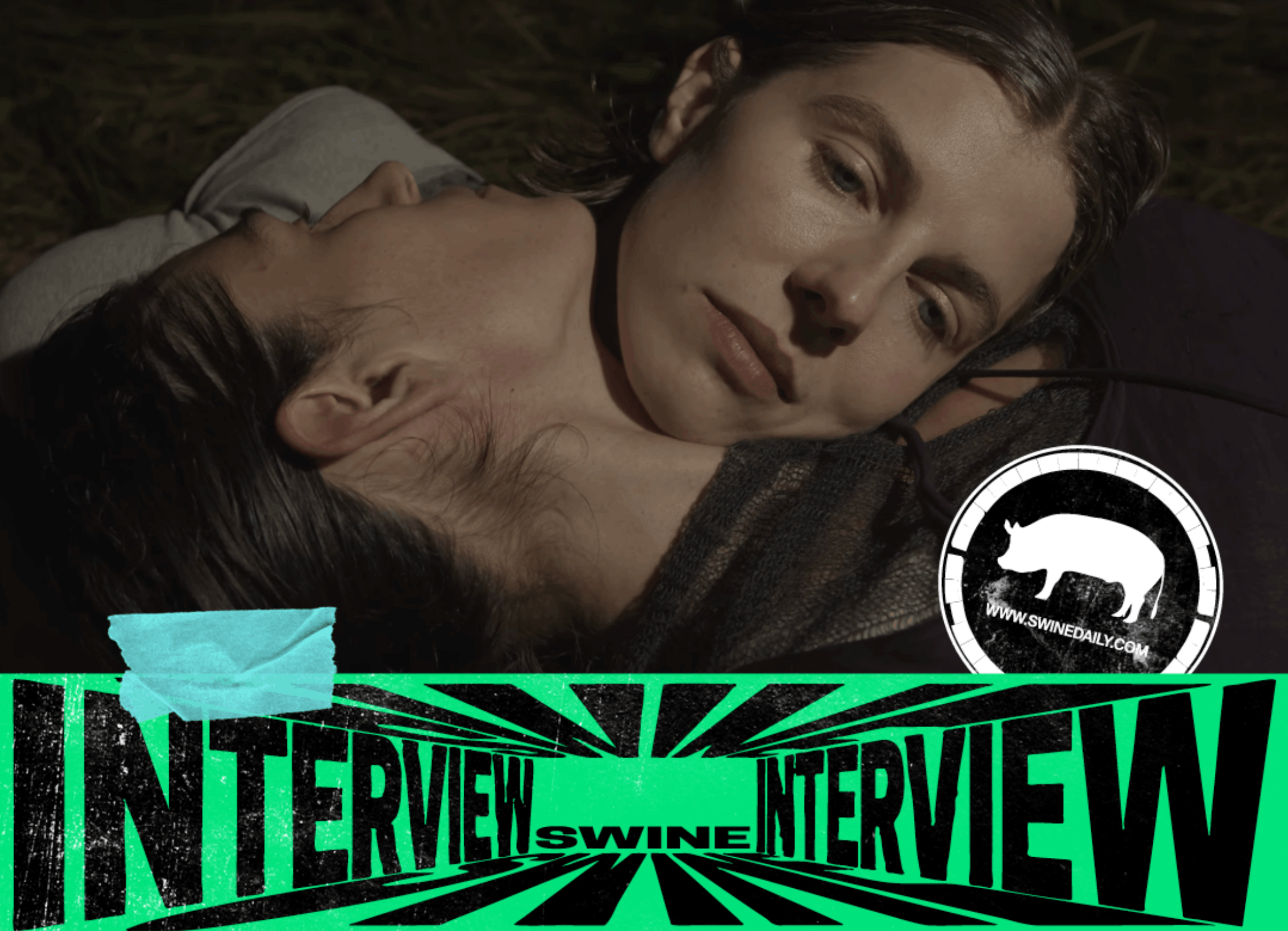
On March 6th, Danish artist Alto Aria (Rhizome, Posh Isolation) follows up their latest album Ephemeral (2025) with a new single, „Stars Align“, released on Copenhagen-based record label Rhizome. Stars Align is an ode to the impermanence of emotion and the euphoric moments that stretch into the dark, clear night sky. It exposes the intrinsic melancholia of time, embodied by those who dare to remain open-hearted.
An eerie, weightless vocal wanders through a landscape of sweeping string arrangements and experimental textures. Guided by a halting, UK garage-inspired rhythm, the composition blurs the lines between past and future, resulting in a profound sense of temporal displacement.
Alto Aria continues the journey started in 2025 with Ephemeral, further exploring the haunting textures that defined their work with Skarv, Yan Higa, Space Afrika, or Croatian Amor. Their new single, „Stars Align“, deepens this aesthetic through both sound and vision. You can watch in the exclusive Swine Premiere the accompanying music video, a collaboration between Aria and Nanna Koppel, starring Marta Holm and Nanna Elisabeth Eide in a poignant visual extension of the music.
„Stars Align“ is a little tale to Ephemeral. Another line of connections to follow, like drawing images in the evening sky. Reminding us that what we feel is happening might not be happening. What we might feel right now isn’t forever. Both the smile and the tear belong to your face. The body knows it is ephemeral, more open than ever,“ says Alto Aria.
I noticed various references to the cosmos, which can also be felt in the music itself. Were you inspired by cosmology and the connection between humans and outer space?
I am very much inspired by my surroundings when I create music, not only visually, but also physically and emotionally. When creating the song “Stars Align,” I was interested in the tides and how they are moved by the moon, how something so far away can affect something so near. That idea connects back to my debut album Tides, and I remain fascinated by the ocean and the many ways it infiltrates my work.
In my music, I am interested in how nature can mirror internal movement. The tides shift, and I shift. The seasons change, and I change. There is something grounding in recognizing that rhythm, in understanding that we are not separate from these cycles but deeply embedded in them. For me, the cosmic references are less about astronomy and more about belonging. They soften the boundary between me and my surroundings. When I sing, “both the smile and tear belong to your face tonight,” it is about embracing the varieties of being human, allowing feelings to arise.
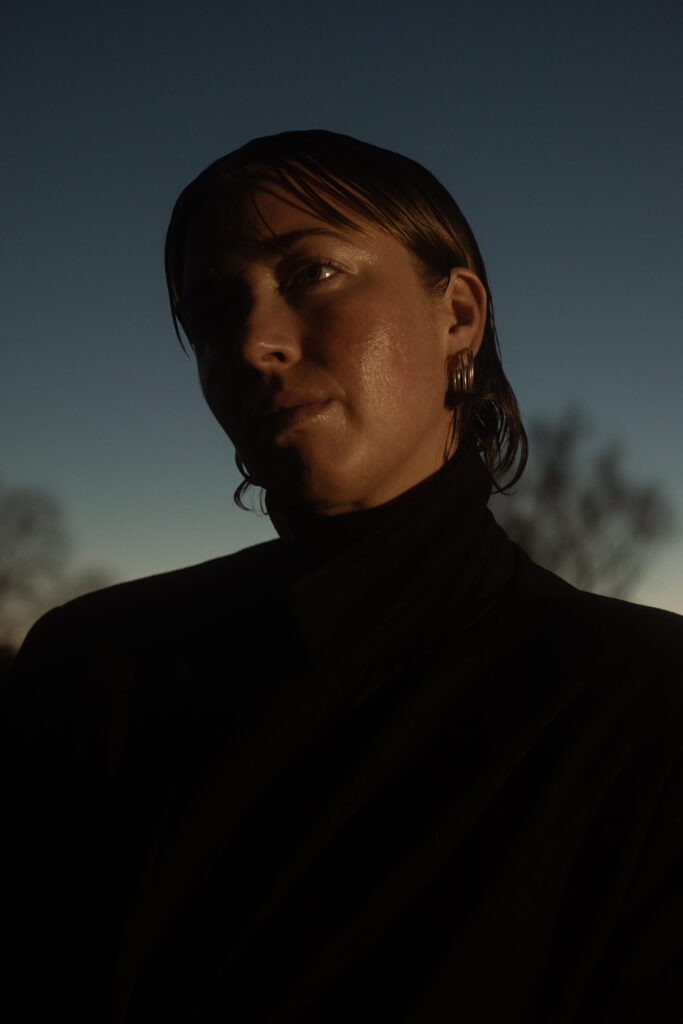
Alto Aria. Photo by Amanda Bødker
I really love how smoothly you connected the sounds of the violin or cello with delicate ambient textures. Sometimes the drums, low in the background, create a truly magical atmosphere. Have you always wanted to bridge these two musical worlds, classical and electronic?
I have always felt drawn to both classical and electronic music. Bringing those worlds together feels intuitive rather than strategic. For me, it is less about merging genres and more about allowing different musical languages to coexist and influence one another. I tend to see myself as a kind of sonic collector, where different inspirations meet and inform each other. The song revolves around acoustic and synthetic cello, and you are very right about the drums. They never fully unfold in this song. Working together with Skarv, we experimented with a version in which they expanded into something more complete, but it felt too resolved. Longing was central to the song, a sense of reaching without fully arriving. By holding back, we preserved that tension. The restraint felt more honest and emotionally aligned with the piece.
I am curious about the creative process behind “Body Knows” with Croatian Amor. Your voice blends so well with the electronic beats and unique sonic textures. How did the two of you collaborate on this?
The song “Body Knows” began as a cover of Frank Ocean’s “Solo,” which I made for a friend while living in Berlin. It was not originally intended for release, but later I sensed it held something that could evolve and become part of Ephemeral.
I rewrote the melodies and lyrics to bring the song closer to my own emotional language. I sent it to Dimming, who added vocal layers that expanded the atmosphere and introduced a new softness. Croatian Amor then contributed rhythm, synth textures, and fragmented vocals in his distinctive style, giving the track a more fractured and tactile quality. What I value a lot in collaboration is unpredictability. I try not to control the outcome too tightly. When others enter the work, it shifts in ways I could not have imagined. That transformation allows me to hear the material from another angle.
When working with other artists, do you share mood boards or inspirations beforehand? How do you ensure you are both tuned into the same vibe?
For Ephemeral, which features Space Afrika, Croatian Amor, Dimming, Yan Higa, and Skarv, I wanted the album to feel collective rather than directed. I shared the emotional framework, falling in love, ephemerality, and body memory, but left room for interpretation. We spoke briefly about the themes, but I avoided strict guidelines. I wanted each collaborator to respond intuitively and bring their own sensibility into the project. When I received their contributions, I was humble and happy. It felt like hearing the same emotional current expressed through different textures. That multiplicity became one of the album’s strengths.
The album also includes a cover of Olive’s “You’re Not Alone.” It was a pleasure to unfold that song in a new context and allow it to expand further in time. It has always been one of my favorites, and working with it felt both nostalgic and transformative.
What inspired the theme of body memory? How did you aim to translate this phenomenon into a musical language? With the repetition and soothing atmosphere, a listener can close their eyes, relax, and sense the songs moving through time, almost like a meditation. Was this your intention?
Body memory fascinates me, the idea that experiences live in the body, not only in thought. Music has always functioned that way for me. When I return to an album I listened to during a certain period of my life, I do not just remember it, I feel it in my body. It could be an ache in the chest, a shivering, or a smile. While working on this album, I reflected on how emotions travel across generations, how certain sensitivities may not begin with us but pass through us. That is why I chose one of my grandmother’s paintings as the artwork. The abstraction in the painting speaks beyond language to me.
The repetition in the lyrics was intentional. I wanted the songs to feel meditative, almost circular. Repetition slows time and creates space for reflection. I also felt that words could not fully contain what I was trying to express. Sometimes, atmosphere and tone can hold something language cannot. Poetry has been an important influence in that sense. I am drawn to language that gestures rather than defines. By keeping the lyrics sparse, meaning is allowed to shift depending on context.
Have you observed any influence on your work from other contemporary Danish musicians or the Copenhagen art scene? If so, in what ways?
The Copenhagen music and art scene runs through my work for sure. Being part of it and a co-founder of the record label Rhizome, I have followed it closely for many years. There is an openness toward subtlety and experimentation here that I truly value. I regularly exchange unfinished ideas with friends working across disciplines, and those conversations quietly or loudly shape my practice.
I am inspired not only by the music and art scene itself, but also by friends working in different fields. For example, one of my friends works with nature, and recently we have spoken about veteran trees and their lifespan. I find that incredibly inspiring, the idea of endurance, memory, and embodied time. These kinds of conversations often filter into my work in unexpected ways.
What are you working on or planning for this year? Can we look forward to hearing more from the Rhizome label?
This spring, I will be performing Ephemeral in different settings. I am looking forward to presenting the material in specific rooms, meeting new people, and experiencing new places. I’m also working on a new album that feels different from my previous work. It centers on the voice and its darker timbres, returning to the meaning of Alto Aria, a voice that carries emotion in a lower register. That is what I can share for now, without revealing too much too soon. Rhizome will spread its roots further this year, I’m sure.
–
Interview: Krištof Budke / Follow Alto Aria on Instagram and Rhizome on SoundCloud
Pridaj komentár