
[English version is down in the article]
Bajo la mirada de Martín Bauer, el Centro de Experimentación (CTC) se define no como un espacio estático, sino como una entidad cuya tarea evoluciona constantemente según la época. Con una trayectoria de más de 35 años, Bauer destaca que, aunque el panorama tecnológico y comunicacional ha cambiado drásticamente desde los años 90, el propósito fundamental del centro permanece intacto: ser un refugio para artistas que buscan experimentar, innovar y desafiar lo establecido. Para Bauer, el CTC es un lugar donde la libertad creativa es la norma y donde la posibilidad de fracasar se entiende como una parte esencial del proceso de búsqueda artística.
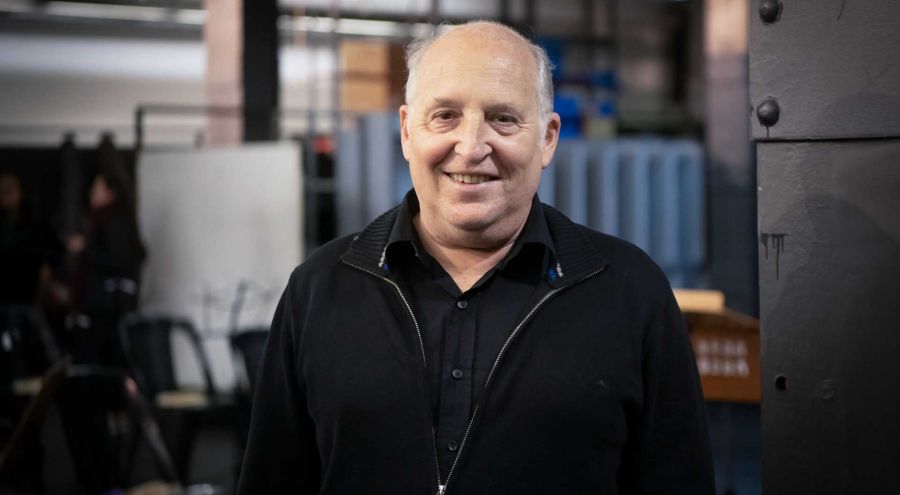
Martín Bauer, director del CETC
¿Cómo describiría la principal línea dramatúrgica de CETC? ¿Existe una idea principal, algunos pilares básicos que CETC haya mantenido desde sus inicios en la década de 1990?
Mira, la principal tarea del CTC va cambiando según la época, porque digamos, el CTC y el teatro en general cumplen una función. Los cambios que existen ahora son vertiginosos, entonces es muy difícil encontrar la posición. Yo creo que el CTC sigue teniendo como misión, desde que se fundó hasta ahora, la posibilidad de darle un espacio de creación y de experimentación a artistas ligados en principio —por eso te digo que la cosa va cambiando— a lo que son las disciplinas del teatro: la música, la danza y el teatro musical.
Bueno, puede ir cambiando. Nosotros este año, por ejemplo, programamos cine. Pero en definitiva, es una apuesta por la innovación y, para serte muy claro, el CTC es un lugar donde los artistas pueden fracasar. Como te digo, imagínate: las cosas van cambiando. En el año 90 yo estuve muy cerca del CTC, Gerardo Gandini hizo dos espectáculos, trabajé con él. Por supuesto, va cambiando mucho la configuración porque cambia el panorama, ¿no? Imagínate, ¿cuántos años son? 35 años atrás la ciudad era otra, el país era otro, el mundo era otro. De hecho, casi no existía internet y, por supuesto, no existían las redes. Había otra relación con los medios gráficos, había otra manera de comunicar. Bueno, las cosas van cambiando, entonces no es lo mismo. Pero sí es el mismo el propósito de darle lugar a artistas que experimenten, que no hagan lo que se viene haciendo.
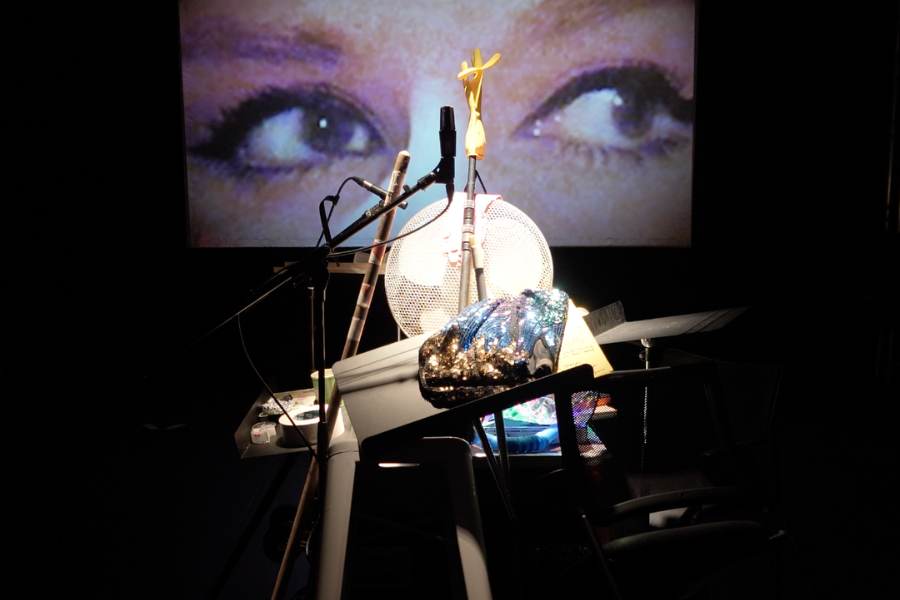
Ópera «OOO» de Valentín Pelisch y Emma Terno
Al principio no fue tan así, porque Gerardo Gandini, que era un tipo muy, muy especial, tuvo que abrir camino con algunos clásicos como si yo te dijera Pierrot Lunaire, por ejemplo, que no se hacía en ningún lado. O sea, el CTC siempre hizo cosas que no se hacían en ningún lado. Cuando empezás, me pasó a mí en el Teatro San Martín, hacés cosas que se deberían haber hecho en otro lado, pero que nunca se hicieron. Es un poco complejo el tema.
¿Cómo describirías tu libertad? ¿Estás de alguna manera vinculado a la dirección del Teatro Colón, o eres prácticamente „libre de hacer lo que quieras“? ¿Trabajas con alguna restricción o límite?
No, yo soy parte de un equipo de trabajo que, digamos, por supuesto, tiene como cabeza al director del teatro, así que después están, digamos, mis colegas. Soy libre de hacer lo que me parezca, no lo que quiera; nunca nadie puede hacer lo que quiera, pero sí llevo adelante los proyectos que me parecen. La dirección del teatro tiene mucha confianza en mí y yo confío en ellos, y la única restricción de verdad objetiva —y es lógico— es la presupuestaria, porque uno tiene que manejarse con los parámetros que tiene a disposición, ¿no? Pero no, me siento con mucha libertad.
Me interesa cómo se te ocurren tus próximos proyectos. ¿De dónde surge la inspiración? ¿Lo estás consultando con mucha gente? ¿Es un proceso difícil?
Bueno, mirá, difícil no es porque es algo que hago hace muchísimo tiempo y va variando mucho el método. Por lo pronto, lo que me parece que existe en mi caso es una intuición difícil de explicar y una concentración que no es puntual, que no es obsesiva, sino que es abierta, ¿no? Estoy concentrado; depende de la época también, ¿no? y depende de lo que suceda. En este momento recibo muchas propuestas de mucha gente porque la gente está con mucha necesidad de participar, de mostrar lo que hace, etcétera. Yo estoy atento a eso, pero en general son cosas que se me ocurren a mí.
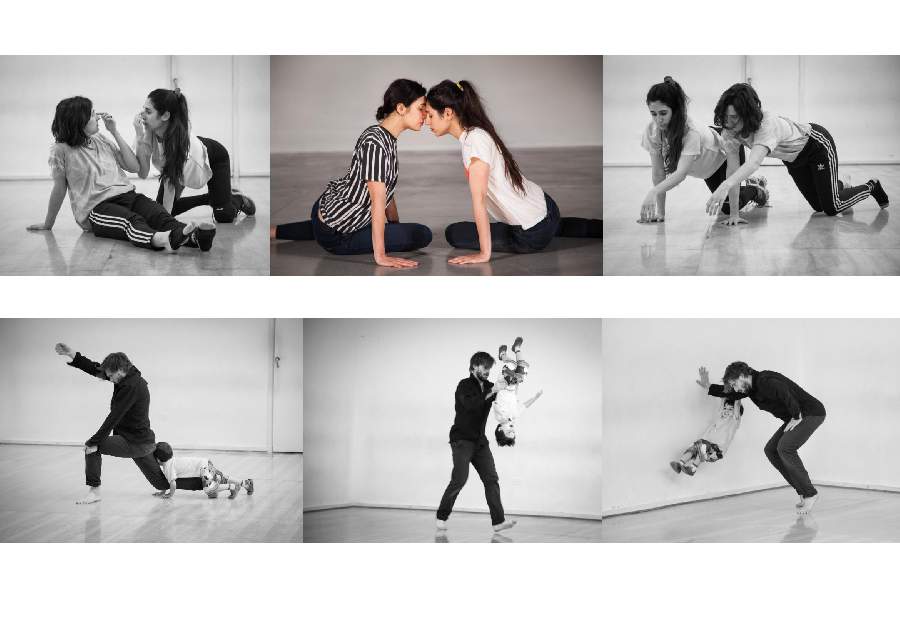
„Mi contundente situación“ (danza contemporánea), dir.: Diana Szeinblum, CETC.
¿Cómo percibes la escena actual de la música experimental/contemporánea clásica en Argentina, y especialmente en Buenos Aires? ¿Qué instituciones están activas aquí y podrían compararse con la dramaturgia del CETC? ¿Percibes relaciones positivas en la escena, entre artistas y dramaturgos?
Yo lo que percibo es que, por suerte —y lo celebro—, están apareciendo experiencias autónomas, autogestionadas. Es lógico, porque la situación actual exige a los productores, a los autores y a los intérpretes creatividad, ideas nuevas. Y me gusta mucho lo que está haciendo Paraíso, que vamos a hacer una coproducción con el CTC con ellos; me gusta su sistema, me parece buenísimo. Me gusta mucho lo que está haciendo Juan Onofri con Planta Inclan, también Juan va a hacer un espectáculo en el CTC. Entonces, yo estoy atento a detectar lo que se va moviendo y tratar de, bueno, de aliarnos, ¿no? Es un poquito eso.
¿Cómo percibe al público que asiste a las funciones de CETC? ¿Es más o menos el mismo público, o viene mucha gente nueva? ¿Cómo intenta conectar con el público objetivo?
El público del CTC… bueno, tiene como dos fuentes, por decirlo así. Aparte es muy diverso, ¿no? Cuando hicimos Vejaciones, vinieron como 8.000 personas. Una es la gente que viene al teatro habitualmente, tanto en la Sala Grande como al CTC. Y otro es un público más joven, un público nuevo; depende mucho del espectáculo de que se trate. Por ejemplo, en el de Melissa Szwarc, vino mucha gente que me da la sensación de que antes no había venido.
¿Algún concierto que te haya cautivado últimamente?
Respecto a si hubo un concierto… me estás preguntando muy puntualmente, ¿no?, que me gustó o que me llamó… no sé, lo escribí en el Instagram. Hubo un concierto que me llevó a ser público, me transformó en público, que es algo que a mí me encanta y que no me pasa siempre, ¿no?. Fue el que hizo Lucas Urdampilleta cuando tocó ‚El pueblo unido jamás será vencido‘ ahora en noviembre.
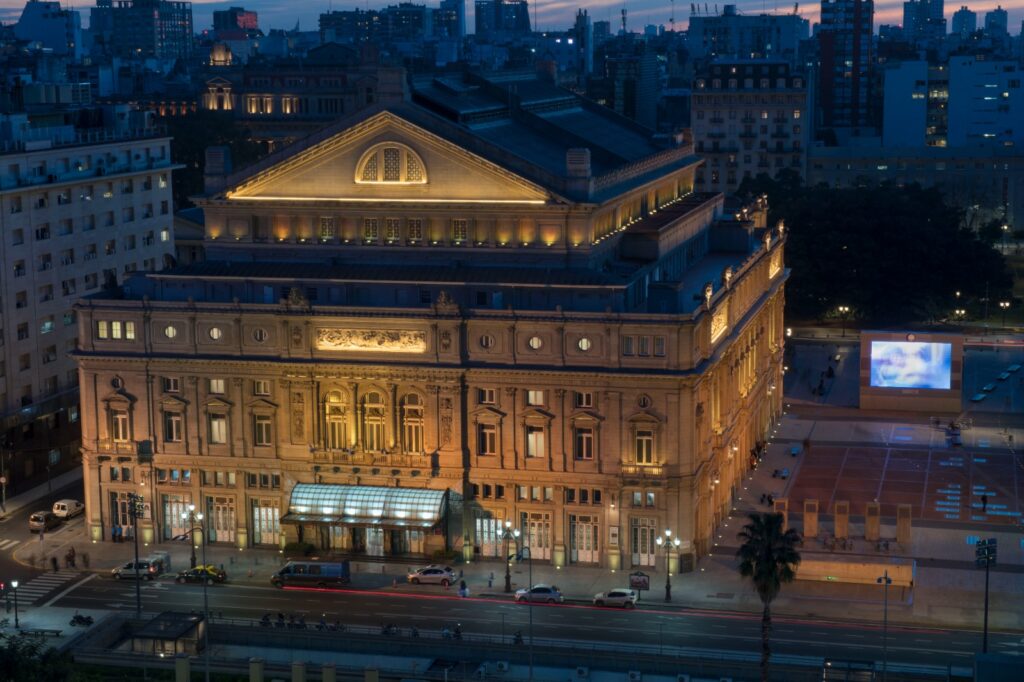
Teatro Colón en Buenos Aires, Argentina
Under the gaze of Martín Bauer, the Centro de Experimentación (CETC) is defined not as a static space, but as an entity whose tasks constantly evolve according to the times. With a career spanning over 35 years, Bauer highlights that, although the technological and communication landscape has changed drastically since the 90s, the fundamental purpose of the center remains intact: to be a refuge for artists seeking to experiment, innovate, and challenge the established. For Bauer, the CETC is a place where creative freedom is the norm and where the possibility of failure is understood as an essential part of the artistic search process.
How would you describe the main dramaturgical line of the CETC? Is there a main idea or some basic pillars that the CETC has maintained since its beginnings in the 1990s?
Look, the main task of the CETC changes according to the era because the CETC and theater in general fulfill a function. The changes happening now are vertiginous, so it is very difficult to find a fixed position. I believe the CETC continues to have as its mission—from its founding until now—providing a space for creation and experimentation for artists linked, in principle, to the disciplines of theater: music, dance, and musical theater.
But it can change; for example, this year we programmed a film. Ultimately, it is a commitment to innovation; to be very clear, the CETC is a place where artists can fail. As I said, things change. In 1990, I was very close to the CETC; Gerardo Gandini did two shows, and I worked with him. Of course, the configuration changes a lot because the panorama changes. Imagine how many years it’s been? Thirty-five years ago, the city was different, the country was different, and the world was different. In fact, the internet almost didn’t exist, and, of course, social media didn’t exist. There was a different relationship with print media and a different way of communicating.
Things change, so it’s not the same. But the purpose of giving space to artists who experiment—who don’t do what has already been done—remains the same. At the beginning, it wasn’t quite like that because Gerardo Gandini, who was a very, very special guy, had to lead the way with some classics, like Pierrot Lunaire, for example, which wasn’t being performed anywhere. In other words, the CETC has always done things that weren’t done anywhere else. When you start out—it happened to me at the San Martín Theater—you do things that should have been done elsewhere but never were. It’s a bit of a complex issue.
How would you describe your freedom? Are you linked to the management of the Teatro Colón in some way, or are you practically „free to do whatever you want“? Do you work with any restrictions or limits?
No, I am part of a work team that, of course, is headed by the director of the theater, and then there are my colleagues. I am free to do what seems right to me, not whatever I want; no one can ever do just whatever they want, but I do carry out the projects that I see fit. The theater management has a lot of confidence in me, and I trust them, and the only truly objective restriction—and it’s logical—is the budget, because one has to manage within the parameters available. But no, I feel a lot of freedom.
I’m interested in how your next projects occur to you. Where does the inspiration come from? Do you consult with many people? Is it a difficult process?
Well, look, it’s not difficult because it’s something I’ve been doing for a very long time, though the method varies a lot. For now, what exists in my case is an intuition that is difficult to explain and a concentration that isn’t punctual or obsessive, but rather open. I am focused; it depends on the era and what is happening. Right now, I receive many proposals from many people because people have a great need to participate and show what they do. I am attentive to that, but generally, they are things that occur to me.
How do you perceive the current experimental/contemporary classical music scene in Argentina, and especially in Buenos Aires? What institutions are active here that could be compared to the CETC’s dramaturgy? Do you perceive positive relationships in the scene between artists and dramaturgs?
What I perceive is that, fortunately, and I celebrate it: autonomous, self-managed experiences are appearing. It’s logical because the current situation requires creativity and new ideas from producers, authors, and performers. I really like what Paraíso is doing, and we are going to do a co-production with them at the CETC. I like their system; it seems great to me. I also really like what Juan Onofri is doing with Planta Inclan; Juan is also going to do a show at the CETC. So, I am attentive to detecting what is moving and trying to form alliances.
How do you perceive the audience that attends CETC performances? Is it more or less the same audience, or do many new people come? How do you try to connect with the target audience?
The CETC audience… well, it has two sources, so to speak. Besides, it is very diverse. When we did Vexations (Vejaciones), about 8,000 people came. One source is the people who come to the theater regularly, both to the Main Hall and the CETC. And the other is a younger audience, a new audience; it depends a lot on the specific show. For example, for Melissa Szwarc’s show, a lot of people came who gave me the impression that they had never been there before.
Any concert that has captivated you lately?
Regarding whether there was a concert… you are asking me very specifically, right? Something I liked or that called to me… I don’t know, I wrote about it on Instagram. There was a concert that turned me back into an audience member—it transformed me into the public, which is something I love and doesn’t always happen to me. It was the one Lucas Urdampilleta did when he played ‚El pueblo unido jamás será vencido‘ recently in November.
–
This interview was conducted (online) by Krištof Budke during his stay in Buenos Aires, Argentina. You can follow CETC on Instagram
Pridaj komentár